Bahrain
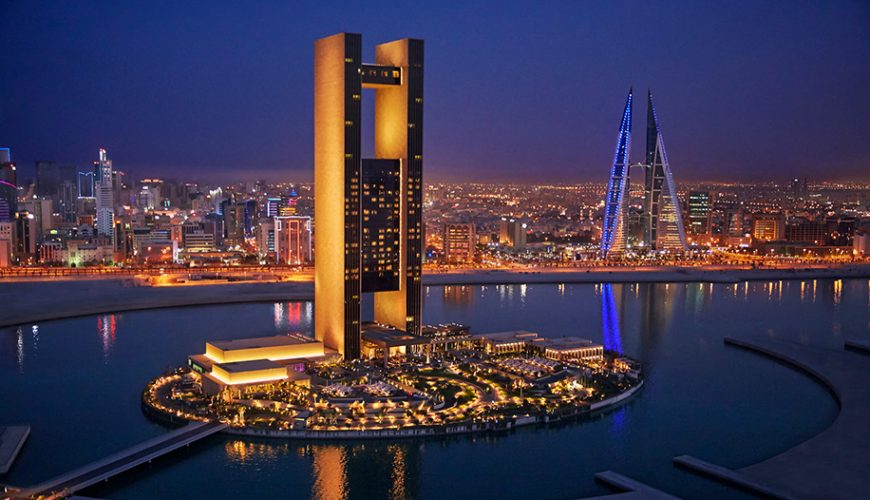
Bahrain, officially the Kingdom of Bahrain, is an island country in Western Asia. It is situated on the Persian Gulf, and comprises a small archipelago made up of 50 natural islands and an additional 33 artificial islands, centered on Bahrain Island which makes up around 83 percent of the country’s landmass.
-
BY admin
- August 30, 2022 6:13 am
- no comment
Azerbaijan
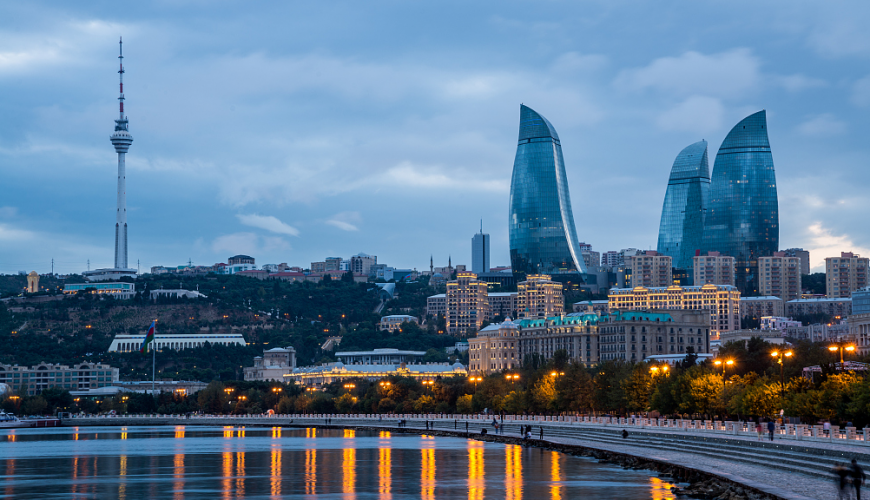
Officially the Republic of Azerbaijan, is a transcontinental country located at the boundary of Eastern Europe and Western Asia. It is a part of the South Caucasus region, and is bounded by the Caspian Sea to the east, Russia (Republic of Dagestan) to the north, Georgia to the northwest, Armenia and Turkey to the west, and Iran to the south. Baku is the capital and largest city. The Azerbaijan Democratic Republic proclaimed its independence from the Transcaucasian Democratic Federative Republic in 1918 and became the first secular democratic Muslim-majority state. In 1920, the country was incorporated into the Soviet Union as the Azerbaijan SSR. The modern Republic of Azerbaijan proclaimed its independence on 30 August 1991, shortly before the dissolution of the Soviet Union in the same year. In September 1991, the ethnic Armenian majority of the Nagorno-Karabakh region formed the self-proclaimed Republic of Artsakh. The region and seven surrounding districts are internationally recognized as part of Azerbaijan pending a solution to the status of the Nagorno-Karabakh through negotiations facilitated by the OSCE, became de facto independent with the end of the First Nagorno-Karabakh War in 1994. Following the 2020 Nagorno-Karabakh war, the seven districts and parts of Nagorno-Karabakh were returned to Azerbaijani control. Azerbaijan is a unitary semi-presidential republic. It is one of six independent Turkic states and an active member of the Organization of Turkic States and the TÜRKSOY community. Azerbaijan has diplomatic relations with 182 countries and holds membership in 38 international organizations, including the United Nations, the Council of Europe, the Non-Aligned Movement, the OSCE, and the NATO PfP program. It is one of the founding members of GUAM, the CIS, and the OPCW. Azerbaijan is also an observer state of the WTO. The vast majority of the country’s population (97%) is nominally Muslim, but the constitution does not declare an official religion and all major political forces in the country are secularist. Azerbaijan is a developing country and ranks 88th on the Human Development Index. It has a high rate of economic development, literacy, and a low rate of unemployment.[26] However, the ruling New Azerbaijan Party, in power since 1993, has been accused of authoritarian leadership and the deterioration of the country’s human rights record, including increasing restrictions on civil liberties, particularly on press freedom and political repression.
-
- August 30, 2022 6:08 am
- no comment
Lahore
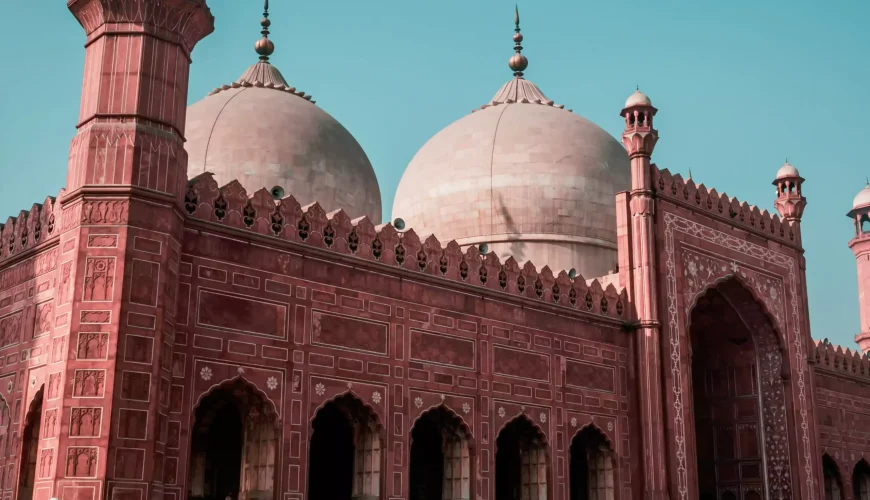
Lahore is the capital of the Pakistani province of Punjab, is Pakistan’s 2nd largest city after Karachi, and is the 26th largest city in the world. Lahore is the largest city of Punjab. Lahore is one of Pakistan’s wealthiest cities with an estimated GDP (PPP) of $84 billion as of 2019. It is the largest city and recent historic, modern day cultural centre of the wider Punjab region, and is one of Pakistan’s most socially liberal, progressive, and cosmopolitan cities. Lahore’s origins reach into antiquity. The city has been controlled by numerous empires throughout the course of its history, including the Hindu Shahis, Ghaznavids, Ghurids, and Delhi Sultanate by the medieval era. Lahore reached the height of its splendor under the Mughal Empire between the late 16th and early 18th century and served as its capital city for many years. The city was captured by the forces of the Afsharid ruler Nader Shah in 1739, then fell into a period of decay while being contested between the Afghans and the Sikhs. Lahore eventually became the capital of the Sikh Empire in the early 19th century and regained some of its lost grandeur. Lahore was then annexed to the British Empire, and made capital of British Punjab. Lahore was central to the independence movements of both India and Pakistan, with the city being the site of both the declaration of Indian Independence, and the resolution calling for the establishment of Pakistan. It experienced some of the worst rioting during the Partition period preceding Pakistan’s independence. Following the success of the Pakistan Movement and subsequent partition of British India in 1947, Lahore was declared the capital of Pakistan’s Punjab province. Lahore exerts a strong cultural influence over Pakistan. It is a UNESCO City of Literature and major center for Pakistan’s publishing industry; Lahore remains the foremost center of Pakistan’s literary scene. The city is also a major centre of education in Pakistan, with some of Pakistan’s leading universities based in the city. For many years, Lahore was home to Pakistan’s film industry, Lollywood, though in recent years most filming has shifted to Karachi. Lahore is a major centre of Qawwali music. The city also hosts much of Pakistan’s tourist industry, with major attractions including the Walled City, the famous Badshahi and Wazir Khan mosques, as well as several Sikh and Sufi shrines. Lahore is also home to the Lahore Fort and Shalimar Gardens, both of which are UNESCO World Heritage Sites.
-
- August 30, 2022 5:46 am
- no comment
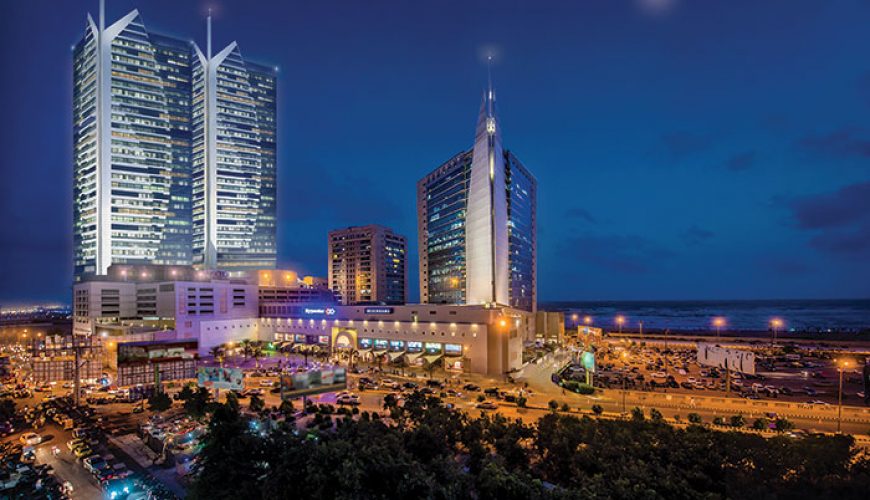
Karachi
Karachi is the largest city in Pakistan and the twelfth-largest city in the world. It is the capital of the Pakistani province of Sindh. Ranked as a beta-global city, it is Pakistan’s premier industrial and financial center, with an estimated GDP of $164 billion (PPP) as of 2019. Karachi is Pakistan’s most cosmopolitan city, linguistically, ethnically, and religiously diverse, as well as one of Pakistan’s most secular and socially liberal cities. With its location on the Arabian Sea, Karachi serves as a transport hub, and is home to Pakistan’s two largest seaports, the Port of Karachi and Port Bin Qasim, as well as Pakistan’s busiest airport, Jinnah International Airport. Though the region surrounding and in Karachi has been inhabited for millennia, the city was formally founded as the fortified village of Kolachi in 1729. The settlement drastically increased in importance with the arrival of the British East India Company in the mid-19th century. The British administrations embarked on major projects to transform the city into a major seaport, and connected it with their extensive railway network throughout the Indian subcontinent. At the time of the Partition of British India in 1947, the city was the largest in Sindh with an estimated population of 400,000 people Following the independence of Pakistan, the city experienced a dramatic shift in population and demography with the arrival of hundreds of thousands of Muslim refugees from India, coupled with a substantial exodus of its Hindu residents, declining from 51.1 per cent to 1.7 per cent of the total population. The city experienced rapid economic growth following Pakistan’s independence, attracting migrants from throughout the country and other regions in South Asia by extension. According to the 2017 national census, Karachi’s total population was 16,051,521, with 14.9 million of that figure residing in the urban areas of the city proper. Karachi is one of the world’s fastest-growing cities,[36] and has significant communities representing almost every ethnic group in Pakistan. Karachi is home to more than two million Bangladeshi immigrants, a million Afghan refugees, and up to 400,000 Rohingyas from Myanmar. Karachi is now Pakistan’s premier industrial and financial center. The city has a formal economy estimated to be worth $114 billion as of 2014, which is the largest in the country. Karachi collects more than a third of Pakistan’s tax revenue, and generates approximately 20% of Pakistan’s entire GDP. Approximately 30% of Pakistani industrial output is from Karachi, while Karachi’s ports handle approximately 95% of Pakistan’s foreign trade. Approximately 90% of the multinational corporations operating in Pakistan are headquartered in Karachi. Karachi is considered to be Pakistan’s fashion capital, and has hosted the annual Karachi Fashion Week since 2009. Known as the “City of Lights” in the 1960s and 1970s for its vibrant nightlife, Karachi was beset by sharp ethnic, sectarian, and political conflict in the 1980s with the large-scale arrival of weaponry during the Soviet–Afghan War. The city had become well known for its high rates of violent crime, but recorded crimes sharply decreased following a crackdown operation against criminals, the MQM political party, and Islamist militants, initiated in 2013 by the Pakistan Rangers. As a result of the operation, Karachi dropped from being ranked the world’s 6th-most dangerous city for crime in 2014, to 115th by mid-2021.
-
- August 30, 2022 5:17 am
- no comment